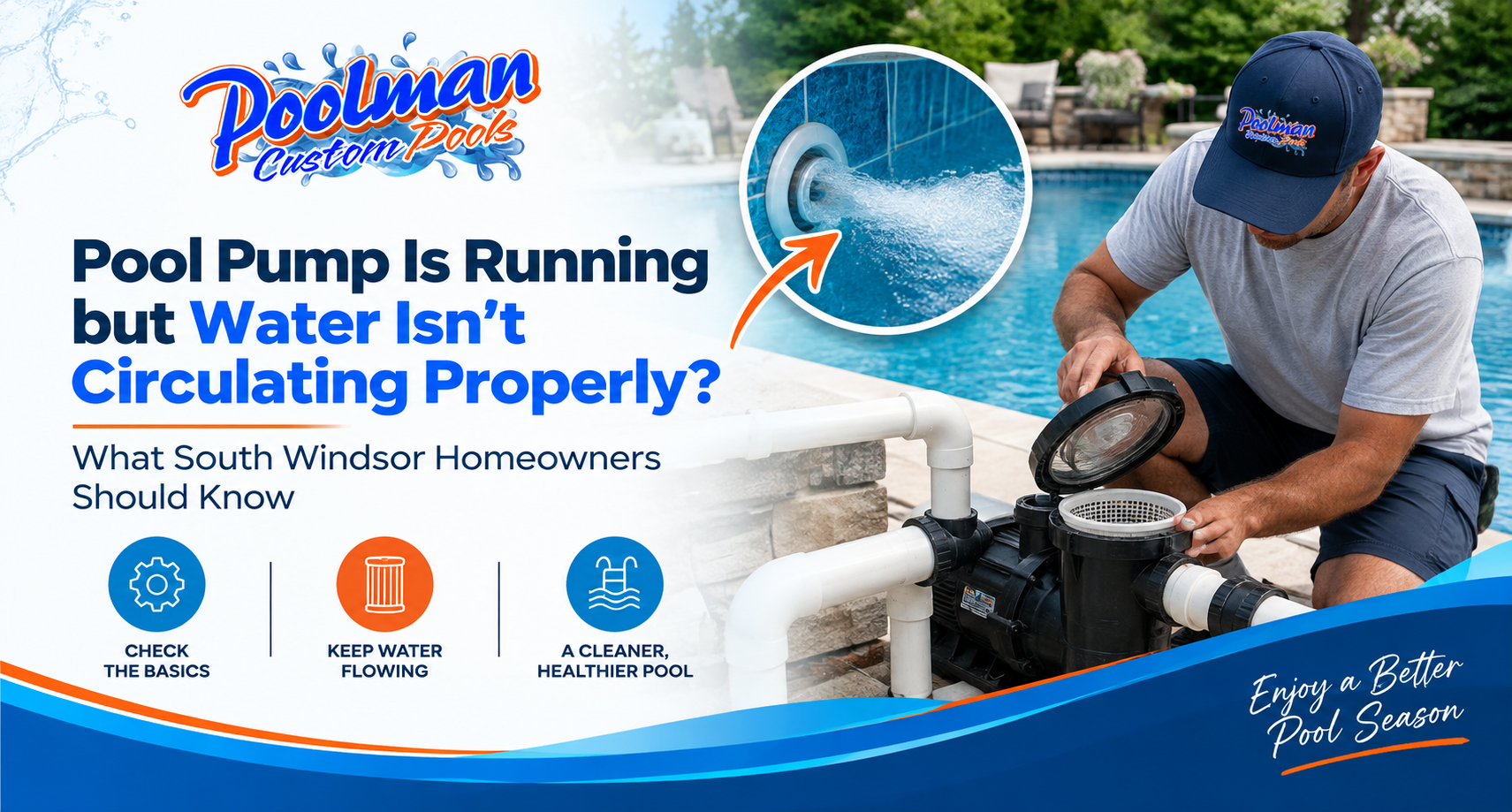
Your pool pump sounds like it is running, but something does not seem right. Maybe the return jets feel weaker than usual, the skimmer is barely pulling in debris, or parts of the pool water seem almost still. When this happens, the pump may be operating, but water may not be circulating through the system properly.
Good circulation is an important part of maintaining clear, balanced pool water. It helps move water through the filtration system, distribute pool chemicals, and prevent debris from settling in certain areas. For South Windsor homeowners, recognizing circulation problems early can help prevent a small equipment or maintenance issue from becoming a larger problem.
Why Does Proper Pool Circulation Matter?
Your pool’s circulation system continuously moves water from the pool through the skimmer and drains, into the pump and filter, and then back through the return jets.
When this process works correctly, the filter can remove debris and contaminants while treated water is distributed throughout the pool. When circulation becomes weak, some areas may receive less filtration and chemical distribution.
Cloudy water, algae growth, debris buildup, and inconsistent water quality can sometimes accompany circulation problems. If you are unsure why water flow has changed, a pool professional such as PoolManPools can inspect the equipment and help determine where the restriction or problem is occurring.
Start by Checking the Pool Water Level
Sometimes the cause is surprisingly simple.
If the water level becomes too low, the skimmer may begin pulling in air instead of a steady supply of water. This can interfere with the pump’s ability to maintain normal circulation.
Look at the water level in relation to your skimmer opening and follow the pool or equipment manufacturer’s recommendations. If the level has dropped significantly, also consider why. Hot weather and normal use can cause water loss, but frequent or unexplained drops may deserve further investigation.
Check the Skimmer and Pump Baskets
Leaves, insects, twigs, grass, and other debris can collect inside the skimmer basket. If enough material builds up, it can restrict the amount of water reaching the pump.
The pump basket can develop a similar problem.
Homeowners can inspect and clean accessible baskets according to their equipment manufacturer’s instructions. Always turn equipment off as directed before opening or servicing components. If circulation improves after removing a large amount of debris, restricted flow may have contributed to the problem.
A Dirty Filter Can Restrict Water Flow
The filter has an important job: removing unwanted material from circulating pool water. As dirt and debris accumulate, however, water may have a harder time passing through it.
Different filters require different maintenance procedures, so homeowners should follow the manufacturer’s instructions rather than assuming every filter should be cleaned the same way.
Professional In-ground pool services in South Windsor CT can also help when circulation remains poor despite normal cleaning and maintenance, especially when the problem involves equipment or plumbing that is difficult for a homeowner to inspect.
Watch for Air in the System
Air bubbles coming continuously from the return jets can be another useful clue.
If air enters the suction side of the circulation system, the pump may struggle to move water efficiently. Depending on the pool setup, potential areas to investigate can include the pump lid seal, fittings, valves, water level, or other components.
You may also notice an unusual amount of air inside the pump housing. Because diagnosing plumbing and pump issues can become complicated, persistent air in the system is a good reason to have the equipment professionally checked.
Are the Return Jets Weaker Than Normal?
Stand near the return jets and compare the water flow with what you normally experience.
If every return suddenly feels weak, there may be a restriction somewhere in the circulation system. If only one return seems affected, the issue may be more localized.
Avoid inserting tools or attempting to dismantle plumbing to clear a suspected blockage. Pool systems operate with electrical and pressurized equipment, and internal problems are better handled by someone familiar with the system.
The Pump Can Run Without Performing Normally
Hearing the motor does not necessarily mean the pump is moving the correct amount of water.
A pump can appear to be operating while experiencing a priming issue, restricted flow, an internal obstruction, or another mechanical problem. Unusual grinding, rattling, humming, overheating, repeated loss of prime, or visible leaking around equipment should not be ignored.
If the pump sounds noticeably different or repeatedly loses normal water flow, turn it off when appropriate and arrange for an inspection rather than allowing it to continue struggling.
Pool Design and Equipment Selection Matter Too
Not every circulation problem develops because something suddenly broke. Pool size, plumbing layout, equipment selection, return placement, and system design all influence how effectively water moves throughout a pool.
This is especially worth considering when building or significantly renovating a pool. Homeowners researching the Best pool builders in Windsor Locks CT can ask how circulation, filtration, equipment sizing, return locations, and long-term maintenance are considered during the planning process.
Good design can make everyday pool care easier after construction is complete.
When Should You Call a Pool Professional?
If you have checked the water level and accessible baskets according to the manufacturer’s instructions but circulation remains weak, professional evaluation may be appropriate.
You should also seek assistance if the pump repeatedly loses prime, leaks, overheats, makes unusual noises, or stops moving water normally. Electrical components around pools require particular care; if you notice damaged wiring, sparking, burning smells, or other electrical concerns, stop using the affected equipment and have it inspected by a qualified professional.
Final Thoughts
A running pool pump and a properly circulating pool are not always the same thing. Low water, clogged baskets, a dirty filter, trapped air, plumbing restrictions, or pump problems can all affect water movement.
For South Windsor homeowners, noticing changes in circulation early is important. Pay attention to weak return jets, poor skimmer action, air bubbles, unusual pump sounds, and changes in water clarity. Addressing the cause rather than simply running the pump longer can help keep your pool system working efficiently and your water easier to maintain throughout the swimming season.