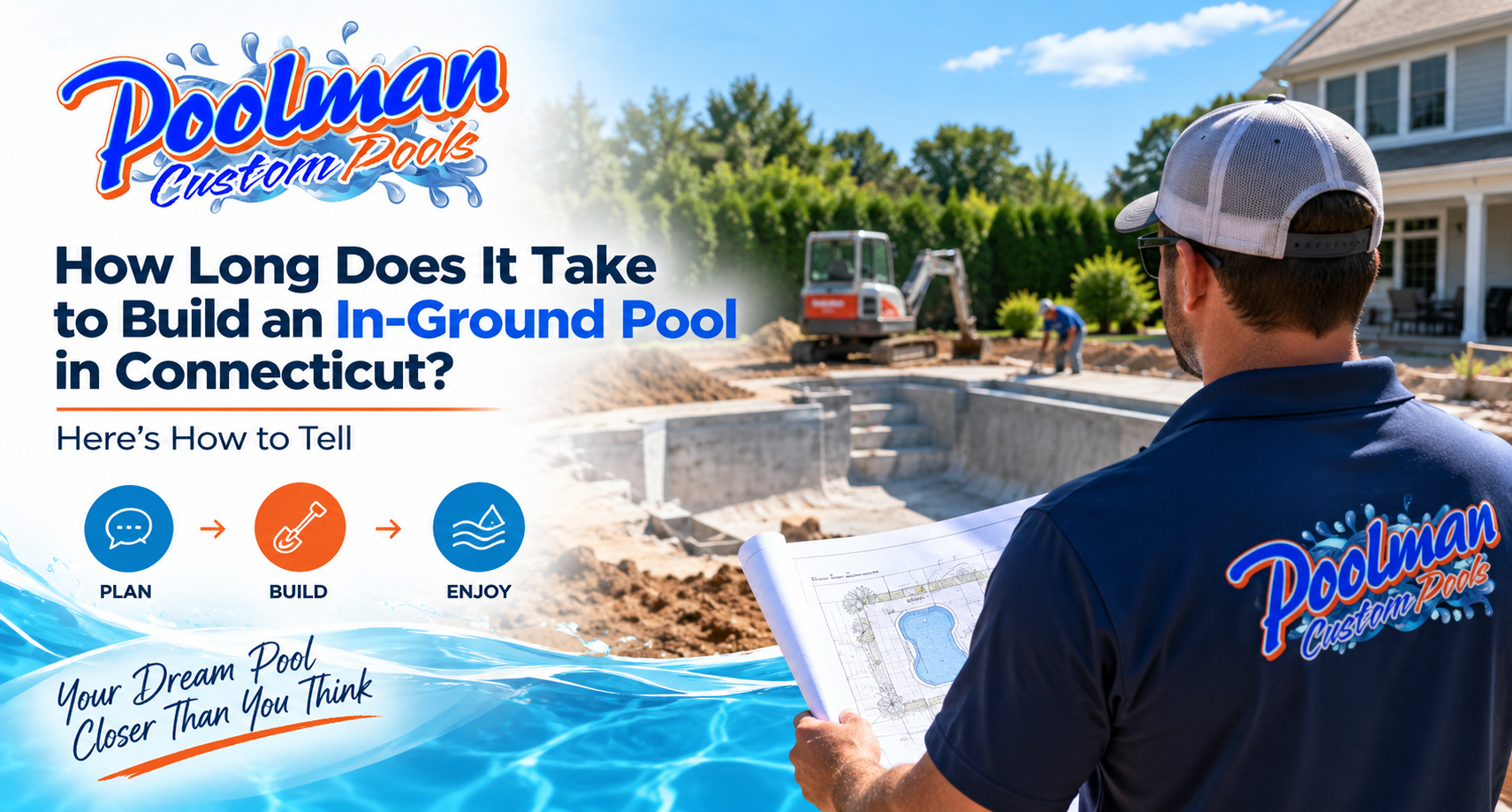
Building an in-ground pool is an exciting home improvement project, but one of the first questions homeowners usually ask is, “How long will it take?” The answer is not the same for every property. Pool size, design, permits, site conditions, weather, materials, and contractor schedules can all influence the timeline.
For Connecticut homeowners, understanding the different stages of pool construction can make planning easier and help set realistic expectations. A pool is much more than simply digging a hole and filling it with water. It requires careful design, excavation, equipment installation, electrical and plumbing work, finishing, and inspections.
Is There a Standard Timeline for Building a Pool?
There is no universal construction timeline for every in-ground pool. A straightforward project on an accessible property may progress faster than a highly customized pool on a difficult site.
The process also begins before excavation. Homeowners need time for consultation, design decisions, site evaluation, permits, and scheduling. Companies such as PoolManPools provide in-ground pool installation and related pool services, helping homeowners understand the different steps involved before construction begins.
The best approach is to think of pool construction as several stages rather than focusing only on the number of days spent digging and building.
1. Initial Consultation and Site Evaluation
The first stage involves discussing what you want from your new pool. This includes the approximate size, shape, location, features, budget, and how the surrounding backyard will be used.
A site evaluation is also important. Contractors may need to consider property access, slopes, drainage, utilities, soil conditions, and the amount of available space.
A smaller backyard or difficult equipment access does not necessarily prevent pool construction, but these conditions can affect planning and the overall timeline.
2. Pool Design and Planning
Once the property has been evaluated, the design can be developed. This is when homeowners make decisions about pool shape, depth, entry points, decking, equipment, lighting, and other features.
Making major changes after construction has started can potentially slow the project. Taking enough time during the planning stage can therefore help the later phases move more smoothly.
Homeowners researching In-ground pool services in South Windsor CT can learn more about how professional planning, property evaluation, design, installation, and final setup fit into the overall pool-building process.
3. Permits and Approvals
Before excavation begins, the required local permits and approvals generally need to be addressed.
Requirements can vary by municipality and project. Depending on the pool and property, local rules may involve building, electrical, zoning, fencing, setbacks, or other safety requirements.
The time required for approvals can vary, so homeowners should avoid assuming construction can begin immediately after choosing a pool. Starting the planning process early gives more flexibility if permits take longer than expected.
4. Excavation and Pool Construction
Once planning and approvals are complete, physical construction can begin.
Excavation is one of the most visible stages because the backyard changes quickly. However, unexpected site conditions can sometimes affect progress. Large rocks, difficult soil, groundwater, limited machinery access, or other obstacles may require additional work.
After excavation, the pool structure and related components are installed according to the chosen pool type and design.
5. Plumbing, Electrical and Pool Equipment
An in-ground pool requires more than the visible swimming area. Pumps, filters, plumbing lines, electrical connections, and other equipment must work together properly.
These systems support circulation, filtration, sanitation, lighting, and other pool functions. Some projects may also include heaters or additional features.
Because electrical and plumbing work must be completed correctly and may involve inspections, this stage should be included when estimating the total project timeline.
6. Decking and Surrounding Areas
The area around the pool is another important part of the project. Depending on the design, homeowners may choose concrete, pavers, or other suitable materials for the surrounding surface.
Additional landscaping or backyard improvements can extend the overall project schedule, especially if they are coordinated with pool construction.
People comparing the Best pool builders in Windsor Locks CT should therefore look beyond the pool itself and discuss how the complete backyard project will be scheduled from preparation through completion.
7. Weather Can Affect Connecticut Pool Construction
Connecticut weather is an important variable. Heavy rain can make excavation and soil work more difficult, while prolonged wet conditions may cause delays.
Seasonal demand also matters. Spring and early summer are naturally popular times for pool projects because homeowners want their pools ready for warm weather.
This is why waiting until the first hot week of summer to start planning may not be ideal. Beginning discussions earlier can provide more time for design, approvals, scheduling, and construction.
What Can Make a Pool Project Take Longer?
Several factors can extend a construction schedule. These include complicated designs, difficult backyard access, unexpected underground conditions, permit delays, weather, material availability, inspections, and changes requested after work has begun.
Custom features can also require additional coordination. The more complex the project, the more important it becomes to establish expectations before construction starts.
Homeowners should ask their contractor which stages are included in the estimated timeline and which factors could cause it to change.
When Should You Start Planning?
If you hope to enjoy a new pool during a particular summer, it is wise to begin researching and planning well in advance.
Early planning gives you time to compare designs, understand your property, establish a realistic budget, complete permit requirements, and work around contractor availability. It also reduces the pressure to make important design decisions quickly.
Final Thoughts
So, how long does it take to build an in-ground pool in Connecticut? There is no single answer that applies to every home. The complete process includes consultation, design, permits, site preparation, excavation, construction, equipment installation, finishing work, and inspections.
Weather, property conditions, design complexity, and local approvals can all affect the schedule. Instead of focusing on the fastest possible completion date, homeowners should focus on proper planning and understanding each stage.
Starting early and discussing the complete timeline with an experienced pool professional can make the process easier to understand—and help turn the idea of a backyard pool into a well-planned outdoor space.