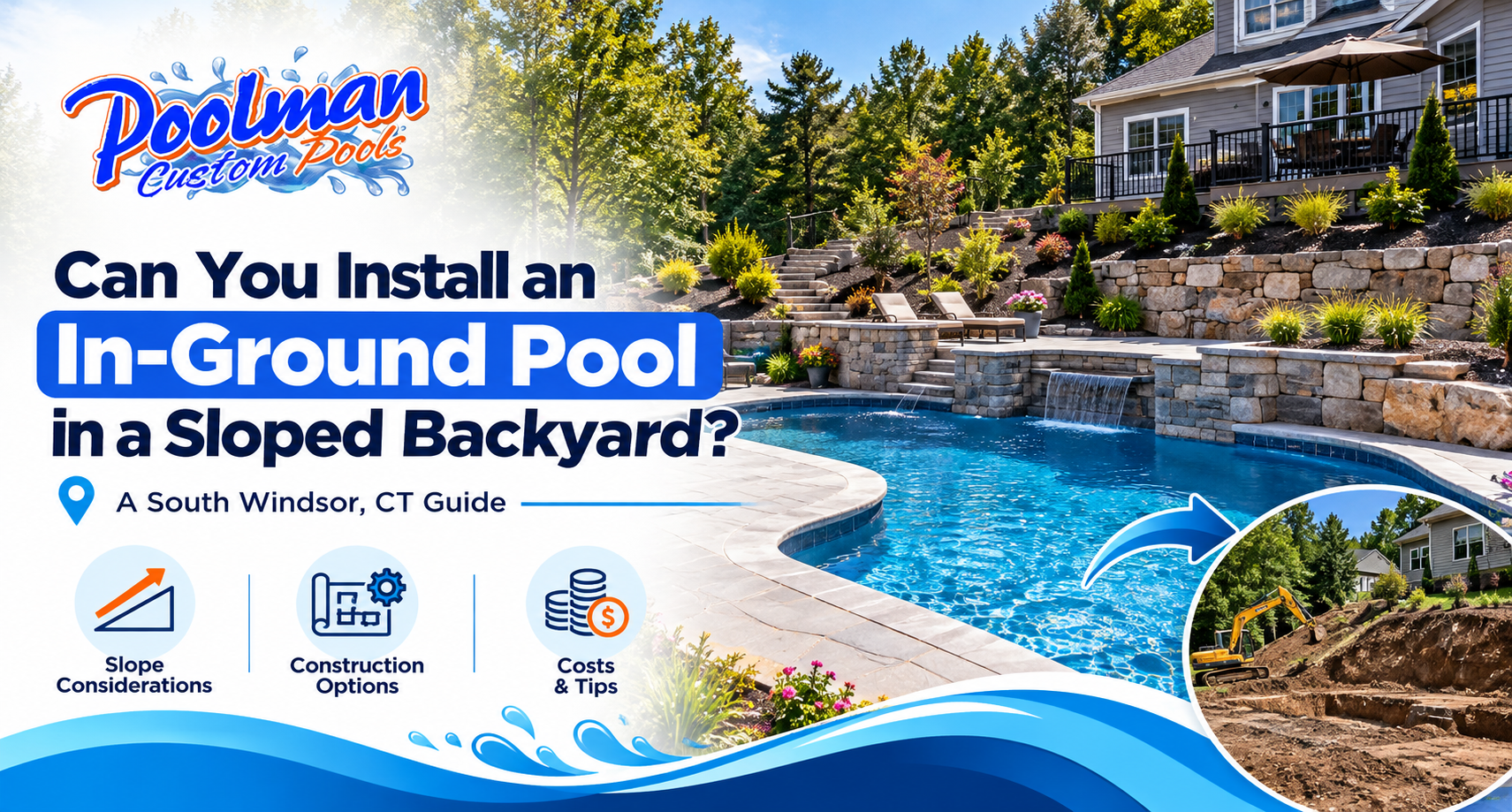
A sloped backyard can make installing an in-ground swimming pool seem challenging. Many homeowners assume their property must be completely flat before construction can begin. Fortunately, that is not always the case. With proper planning, grading, and structural support, some sloped yards can accommodate beautiful and functional swimming pools. For homeowners in South Windsor, CT, understanding how slope affects pool construction can help them make informed decisions before starting a backyard project. From retaining walls to drainage systems, several important factors determine whether a pool can be installed safely and successfully on uneven ground.
Can You Really Build an In-Ground Pool on a Sloped Property?
Yes, an in-ground pool can often be installed on a sloped property, although the construction process may require additional preparation. Unlike a level backyard, a sloped site presents challenges involving soil stability, excavation, drainage, and structural support. The amount of slope and the property’s existing conditions influence the installation approach. Some yards need only moderate grading, while others require engineered retaining walls or specialized construction methods. A professional site evaluation helps determine whether the project is practical and what modifications may be necessary. Homeowners should avoid assuming that every slope can be handled using the same construction technique.
How Does Backyard Slope Affect Pool Placement?
Pool placement is especially important when working with uneven terrain. Builders must consider the direction of the slope, available space, soil conditions, property boundaries, and access for construction equipment. Positioning the pool in a suitable area may reduce the amount of excavation and additional structural work required. Sun exposure, privacy, and the relationship between the pool and the house also influence the design. A thoughtful layout can make the finished backyard feel more connected and functional. Before choosing a location, homeowners should review local setback requirements, easements, and any other restrictions that may affect the project.
Will You Need to Level the Entire Backyard?
Not necessarily. In many cases, only the pool area and surrounding construction zones require significant grading or preparation. Depending on the site, builders may cut into higher ground, build up lower areas with properly engineered support, or combine both approaches. The goal is to create a stable foundation while managing water movement and preserving the surrounding landscape where possible. Excessive grading can sometimes create additional drainage problems or disturb existing features. A qualified contractor can recommend an approach based on the site’s conditions rather than automatically leveling the entire property.
When Are Retaining Walls Necessary for Pool Construction?
Retaining walls may be needed when a significant difference in ground elevation creates a risk of soil movement or erosion around the pool. These structures help support surrounding soil and can create usable terraces within a sloped backyard. However, retaining walls must be designed for the loads and conditions they will experience, including soil pressure, groundwater, and nearby structures. Some projects require engineering plans and additional permits. Proper drainage behind retaining walls is also important because accumulated water can increase pressure. Homeowners should treat retaining walls as structural components rather than simply decorative landscaping features.
Can Poor Drainage Cause Problems for a Pool on a Slope?
Yes, drainage is one of the most important considerations for pool construction on sloped land. Rainwater naturally travels downhill, potentially carrying soil, debris, and sediment toward the pool area. Without appropriate drainage, runoff may contribute to erosion, water accumulation, or instability around decks and retaining structures. Builders may recommend grading adjustments, surface drains, or other site-specific drainage measures to direct water safely away from vulnerable areas. Homeowners exploring In-ground pool services in South Windsor CT should ask how drainage will be addressed before construction begins, especially if their yard already experiences standing water after heavy rainfall.
Does a Sloped Backyard Make Pool Installation More Expensive?
A sloped property can increase installation costs, but the amount depends on the site’s specific conditions. Additional excavation, soil removal, grading, retaining walls, drainage improvements, and equipment access may affect the project budget. A mild slope may require relatively minor adjustments, while a steep or unstable site could need substantial engineering and structural work. Underground rock, groundwater, or unexpected soil conditions may also influence costs. Rather than relying on a standard pool installation estimate, homeowners should request a detailed site-specific proposal that explains necessary preparation, construction work, and potential additional expenses.
What Pool Designs Work Well With Sloped Backyards?
Sloped backyards can offer interesting design opportunities when the pool layout responds to the natural terrain. Terraced patios, raised pool edges, integrated steps, and carefully positioned retaining walls may help connect different elevations. In some cases, a pool can be positioned to take advantage of views or create a distinct outdoor gathering area. However, design choices must remain compatible with the property’s structural and drainage requirements. Homeowners researching the Best pool builders in Windsor Locks CT can also explore how experienced pool contractors evaluate challenging sites and balance appearance with practical construction considerations.
What Should You Check Before Starting Pool Construction?
Before construction, homeowners should arrange a professional site assessment and confirm applicable local requirements. Important considerations include property surveys, underground utility locations, soil conditions, drainage patterns, equipment access, and required permits. Connecticut homeowners should also account for pool barriers, electrical safety, and other applicable building-code requirements. A site plan can help identify potential obstacles before excavation begins. Discussing these details early may reduce unexpected changes during construction and provide a clearer understanding of the project’s scope, timeline, and overall budget.
Final Thoughts
A sloped backyard does not automatically prevent you from installing an in-ground swimming pool. With the right design, site preparation, drainage planning, and structural support, many uneven properties can be transformed into attractive outdoor spaces. However, every yard is different, and the feasibility of installation depends on the slope, soil conditions, available space, and local requirements.
For homeowners in South Windsor, CT, PoolManPools can help explore in-ground pool installation options and evaluate the practical considerations involved in a backyard project. Starting with a professional assessment is an important step toward creating a pool that fits your property and supports long-term enjoyment.